

Pause and ask yourself:
- Why is stress reduction now more vital than ever before?
- What makes stress reduction beneficial for you and your team?
Please click on this 1-minute video about the importance of stress reduction to start your journey.
How to manage stress in the workplace?
The following graph from the 2019 'Cigna 360 Well-being survey' illustrates well why stress reduction is important and beneficial.

The Cigna study comes from the pre-pandemic period and was carried out in 23 countries. Since then, things have gotten worse.
The 2026 UK Burnout Report stated that "39% of people aged 18-24 took time off work due to poor mental health caused by high pressure and stress" in the past year. This report pointed out that 91% of employees experienced high pressure or stress.
The big picture is that today, 9 out of 10 employees feel stressed, and 6 out of 10 are near burnout or have burned out.
High stress builds up because employees lack intrapersonal skills and thus can't lead their own inner processes at will. Thus, they are reactive and get easily triggered. Lack of conscious ability to respond explains why employee engagement levels are low.
Stress reduction influences work results and employee engagement positively.
91% of employees state in the Cigna survey that their colleagues' stress impacts their work results.

Why does stress reduction influence employee engagement?
A calm and fit mind is engaged; a stressed mind isn't.
A stressed mind worries, runs on a 'monkey mind regime', and often even generates toxic thoughts. When such thoughts spread, the workplace culture becomes toxic. No wonder HR and business magazines talk about great resignations and the rise of mental health issues in pandemic proportions.
As of 2026, according to Gallup, the global average employee engagement level stands at a mere 20%, while in best-practice organizations, the engagement number in 2024 was 70% (there is no such data for 2025). The contrast in employee engagement levels between the best and worst-performing workplaces is approximately 50%, highlighting significant room for improvement.
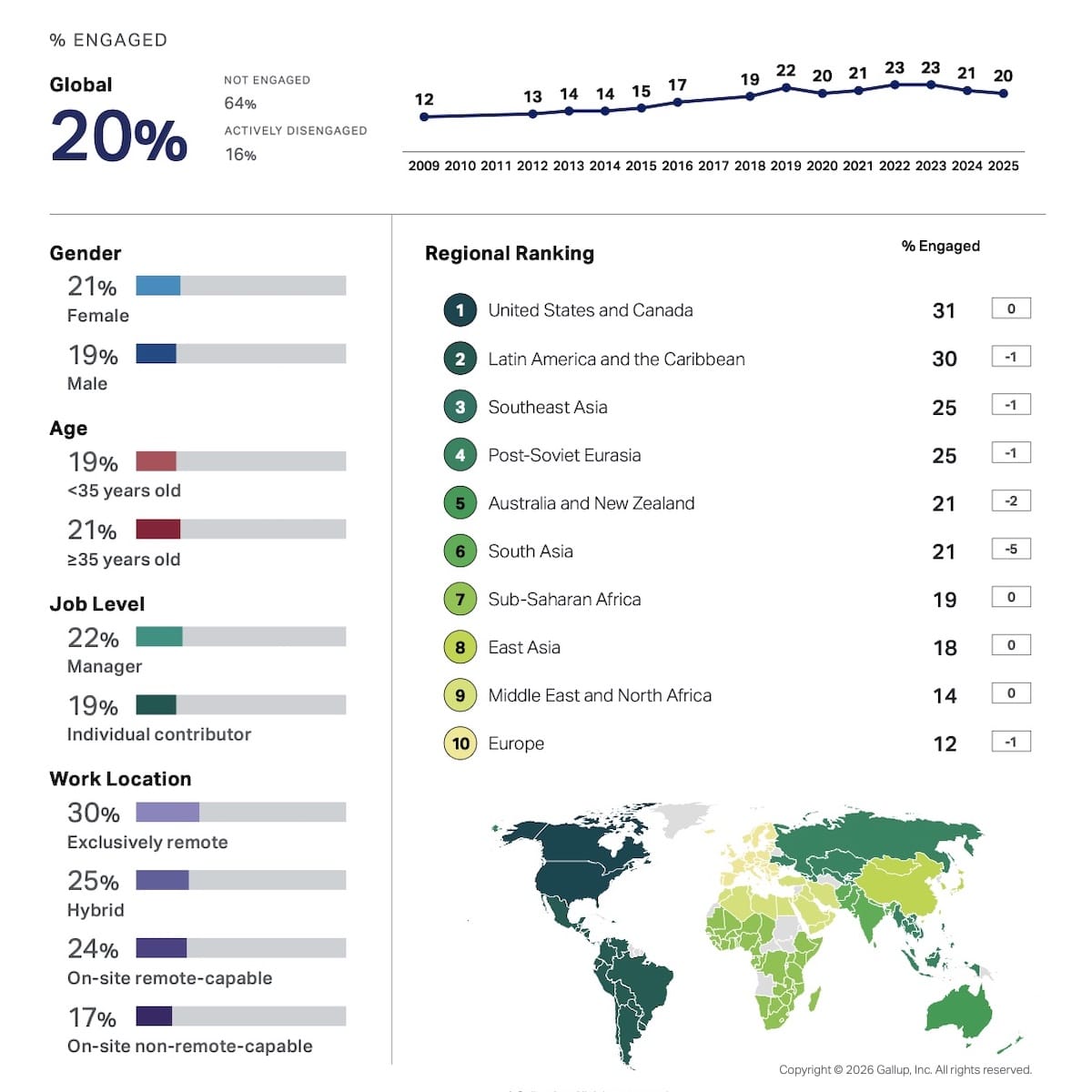
We have revealed in our blogs that improving employee engagement needs to start with stress reduction.
The additional side effect of reducing stress is that it prevents burnout and improves mental wellness. Early stress reduction leaves your most passionate employees engaged and thriving.
You can't focus when your mind is worried, and you feel stressed. It is well proven that, according to the 2022 MHA study, 71% of employees found it difficult to concentrate at work.

The difference here is that a fit mind equipped with practical intrapersonal skills is able to stay tuned to the task at hand and also notices how those tasks fit into a big picture.
A calm mind overcomes obstacles at work, accepts challenges, and thrives in personal life.
Stress reduction boosts employee engagement. According to Gallup, workplaces with best practices have seen employee engagement increase up to 70-73%, instead of the average level between 20 to 23%.
.jpg "Enjoy a free stress test!")
What your team wins from stress reduction is more than employee engagement and productivity.
You will also see better employee relations, better happiness levels, and a more harmonious work culture.
So enjoy your free stress test, it is free for you if you take it within the next 24 hours!
Let the instant feedback and training experience boost your work results.
Conclusion
Stress reduction improves employee engagement and work results; the additional side effect of reducing stress is a burnout prevention and improvement of mind health.
Employees with reduced stress are also more focused, more caring, and contribute to a better work environment, taking fewer sick leaves.
A calmer workplace culture supports overall wellness and fosters collaboration, Access to creativity, and secures long-term resilience in teams.
Take action now and enjoy improved inner calmness and work results.